

Les Fournières Aloxe-Corton 1er Cru 1993


We take the quality of our wines very seriously, which is why all wines are reviewed when they arrive at our warehouse.
Quality check
We perform quality checks on all wines, examining the label, cork and seal, as well as the condition of the wine. This way we create the best conditions for the wine to still be good and drinkable.
Authenticity test
We work with skilled and trustworthy suppliers, and we perform authenticity tests on the wines when they arrive at our warehouse. Here we review the seal, label, bottle number and much more, so that we ensure that the wine is genuine.
We take our guide and service very seriously. When you order wine from us, you will receive a QR code with a link to everything you need to know about treating older wines. You can read more right here .
We select the wines based on strict quality requirements.
The wines must be from quality producers, stored according to all the rules of the art, and pass our final quality assurance when the wine arrives at our warehouse.
This ensures that we can offer a unique product where the probability of a unique experience is very good.
Read more about what to expect
Delivery: We ship orders every weekday.
Delivery time and price:
- Denmark: 1-2 days (39-49 DKK)
- Sweden: 2-3 days (150 SEK)
- Finland: 2-3 days (15 EUR)
- Germany: 2-3 days (15 EUR)
- Netherlands: 2-4 days (15 EUR)
- Generally for EU countries: 2-5 days (15-25 EUR)
NOTE: There may be 1-2 days longer delivery time in remote areas.
Returns: You always have a 30-day right of return.
NOTE : All orders from November 15th to December 24th can be returned until January 31st.
Les Fournières Aloxe-Corton 1er Cru 1993
This 1993 red wine comes from the Les Fournières vineyard, a Premier Cru site in the historic village appellation of Aloxe-Corton. Located in the northern part of the Côte de Beaune at the foot of the Montagne de Corton, the area borders the renowned Grands Crus of Corton and Corton-Charlemagne. The 1993 vintage in this region achieved a score of 85 points, characterized by a good structure and a classic style. The vines here are cultivated at altitudes between 200 and 300 meters on red-brown soils rich in limestone slices, potassium, and phosphoric acid.
The wine is made from Pinot Noir, an elegant blue grape that is the cornerstone of red wine production in Burgundy, though it is also widely cultivated in regions like Champagne, Germany, Oregon, and California. Burgundy itself, located in eastern France, was historically shaped by medieval monks who meticulously mapped the area's countless terroirs. The region has turned terroir into an art form with its intricate system of climats, where the calcareous soils provide the foundation for highly sought-after wines.
Domaine Tollot-Beaut, also known as Tollot-Beaut & Fils, produced and estate-bottled this wine. Founded in 1880 by François Tollot in Chorey-lès-Beaune, the estate is recognized as one of the most reputable small family wineries in Burgundy. A significant historical milestone for the domaine occurred in 1921 when they became one of the first in the region to bottle their own wines, rather than selling grapes or barrels to négociants—a pioneering decision made decades before it became common practice. Today, the estate is managed by the fifth generation of the family, cousins Nathalie, Olivier, and Jean-Paul Tollot, who oversee 24 hectares spread across Chorey-lès-Beaune, Savigny-lès-Beaune, Beaune, and Aloxe-Corton.
The history of the wine
Below, you can delve into the history of this wine — its producer, grape, area, and region.
Burgundy
Burgundy in eastern France was shaped by medieval monks who mapped the area's countless terroirs. The region grows almost exclusively Pinot Noir and Chardonnay and has turned terroir into an art form with its finely meshed system of climats. From Chablis in the north to the Côte d'Or and Mâconnais in the south, the limestone soil yields some of the world's most sought-after and elegant wines.
When this wine was made, the world looked very different. Here are some of the stories that unfolded while this bottle quietly aged in its cellar.
You are in safe hands

100% authentic bottles
All bottles undergo a thorough authenticity test by our certified sommeliers before being offered for sale. We reject bottles we are unsure about.

Thorough quality check
Cork, capsule, fill level, label condition, and provenance are individually documented for each bottle. A physical certificate is included with every purchase.

60-day return policy
We are confident in the quality of our wines, and you as a buyer should be too. Return any unopened bottle within 60 days for a full refund — no questions asked.

4.7 on Trustpilot
277 customers have shared their experience. From the first email to the bottle arriving safely – we take pride in making a difference from start to finish.
How it handles
you your wine

Storage
Store the bottle horizontally at 12–14°C and avoid direct sunlight, vibrations, and temperature fluctuations.

Opening
Allow the bottle to stand upright for 24–48 hours before opening to allow sediment to settle. Use a professional corkscrew and open carefully.

Enjoyment
Serve at 17–18°C and be patient – there is a great difference in how and how quickly wines open up when they are aerated.
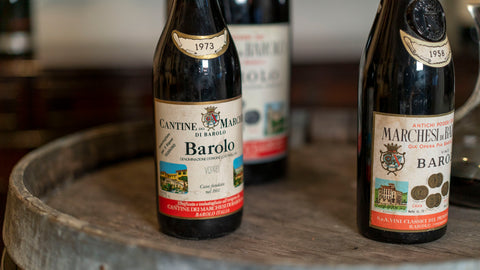
GUIDE TO THE GOOD WINE EXPERIENCE
We will help you throughout the journey. Here you can read our guide on how to treat the wine. If you have any questions, you are always welcome to write or call us.
Our customers say it best!
Based on 247 reviews